


Winter Solstice: Honouring the Longest Night with Candlelight
The winter solstice — the longest night of the year — falls around 21 December in the northern hemisphere. It is the moment when the earth’s tilt reaches its maximum distance from the sun, and darkness reaches its peak. After this night, the days begin to lengthen again — slowly, almost imperceptibly at first, but unmistakably. The light is returning.
For thousands of years, human beings across every culture have marked this moment with fire and light — not to deny the darkness, but to honour it, and to celebrate the return of what comes after. Here is the history of the winter solstice and how to honour it with candlelight today.
The Winter Solstice Across Cultures
The winter solstice is one of the most universally observed astronomical events in human history — and virtually every culture that has observed it has done so with fire and light.
Newgrange, Ireland: The most dramatic example in the Irish landscape is Newgrange — the 5,200-year-old passage tomb in County Meath, older than Stonehenge and the Egyptian pyramids. At dawn on the winter solstice, a shaft of sunlight penetrates the passage and illuminates the inner chamber — a feat of astronomical engineering that required extraordinary knowledge and intention. For the people who built it, the return of the light at the darkest moment of the year was worth marking with one of the greatest architectural achievements in human history.
Yule: The Norse and Germanic festival of Yule was celebrated at the winter solstice with great bonfires, feasting, and the burning of the Yule log — a large log that was lit on solstice eve and kept burning for twelve days. The light and warmth of the fire were understood as a way of supporting the sun’s return and keeping darkness at bay.
Saturnalia: The Roman festival of Saturnalia, celebrated in late December, involved the lighting of candles and lamps throughout the city — a festival of light in the darkest time of year that influenced many of the Christmas traditions that followed.
Christmas: The timing of Christmas — 25 December — was chosen in part to coincide with existing solstice celebrations, and many of its most beloved traditions — candles, lights, the Yule log, evergreen decorations — have their roots in pre-Christian solstice observance.
The Spiritual Meaning of the Winter Solstice
The winter solstice carries a profound spiritual message: that darkness is not permanent, that even the longest night ends, and that the return of light is inevitable. It is a festival of hope — not the naive hope that pretends darkness doesn’t exist, but the deeper hope that has sat with the darkness, honoured it, and trusts in what comes after.
In the Celtic tradition, the solstice was understood as a threshold — a moment between worlds, when the old year was dying and the new was not yet born. It was a time for stillness, for reflection, and for the quiet, courageous act of lighting a candle in the dark.
A Winter Solstice Candle Ritual
Here is a simple ritual for honouring the winter solstice with candlelight:
On the evening of 21 December: As darkness falls, sit quietly in an unlit room for a few minutes. Let yourself feel the darkness — not as something to be feared or escaped, but as something to be honoured. What has this year held? What is ending? What are you ready to release into the dark?
Then, with intention, light a candle. As the flame comes to life, speak aloud:
I honour the darkness that has held this year.
I release what is ending with gratitude for what it taught me.
And I welcome the returning light —
the new beginning that is already on its way.
May this flame be a sign of the light I carry within me,
even in the longest night.
Thank you.
Sit with the candle for as long as feels right. Journal, reflect, or simply be present with the flame. Then, if you wish, light additional candles — one for each intention you want to carry into the new year.
Choosing Your Solstice Candle
- → Michael Candle — for courage and protection as you step into the new year
- → Raphael Candle — for healing and renewal after a difficult year
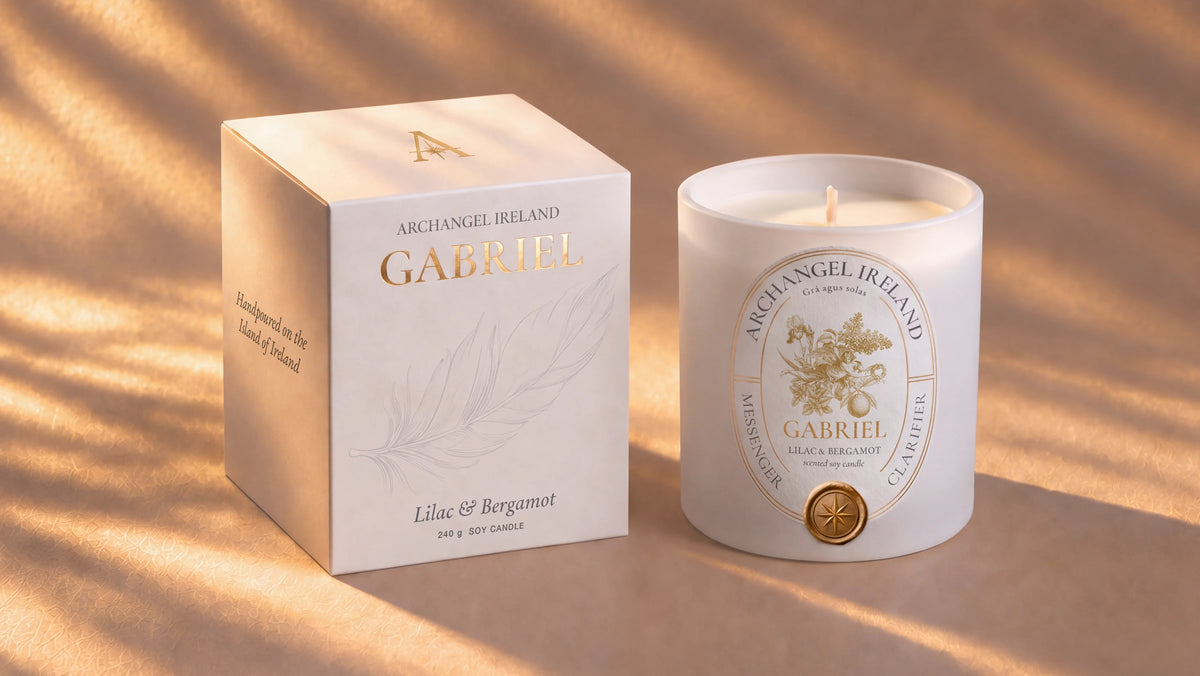
- → Gabriel Candle — for clarity and inspired new beginnings
- → Uriel Candle — for wisdom and the deep knowing of what to carry forward and what to leave behind
For more on the Celtic seasonal calendar, read our guides to Samhain, Imbolc, and Bealtaine. For a new year intention-setting ritual, read our guide to new year intentions with candles.

Written by Gareth W


Leave a comment
This site is protected by hCaptcha and the hCaptcha Privacy Policy and Terms of Service apply.