


Imbolc: The Celtic Festival of Light and New Beginnings
In the depths of an Irish winter, when the days are still short and the cold still bites, something stirs. Beneath the frozen ground, the first green shoots are already pushing upward. The light is returning — slowly, almost imperceptibly, but unmistakably. And for thousands of years, the people of Ireland have marked this moment with one of the most beloved festivals in the Celtic calendar: Imbolc.
What Is Imbolc?
Imbolc (pronounced IM-ulk or IM-molg) is one of the four great festivals of the Celtic year, celebrated on 1 February — the midpoint between the winter solstice and the spring equinox. Its name is thought to derive from the Old Irish i mbolg, meaning “in the belly” — a reference to the pregnancy of ewes and the first stirrings of new life in the natural world.
Imbolc marks the very first breath of spring. Not spring itself — that is still weeks away — but the promise of it. The sense that the worst of winter has passed and that something new is on its way.
Brigid: The Heart of Imbolc
At the centre of Imbolc is Brigid — one of the most beloved figures in Irish tradition, who exists in both pre-Christian and Christian form. In Celtic mythology, Brigid is the goddess of fire, poetry, healing, and craftsmanship — a triple goddess whose three flames illuminate the forge, the hearth, and the creative spirit.
When Christianity came to Ireland, Brigid was transformed into Saint Brigid of Kildare — one of Ireland’s three patron saints — whose feast day falls on 1 February. The sacred flame at her monastery in Kildare, tended by her nuns for centuries, was never allowed to go out. It was relit in 1993 and burns there still.
Whether you connect with Brigid as goddess or saint, her essence is the same: she is the keeper of the flame, the patron of new beginnings, the one who tends the fire through the darkest part of the year so that it is ready when the light returns.
Fire and Candlelight at Imbolc
Fire is central to Imbolc — both as a symbol of Brigid and as a celebration of the returning light. Traditionally, candles were lit in every window of the home on Imbolc eve, filling the house with light as a welcome to the season and an invocation of Brigid’s blessing.
In many Irish homes, a Brigid’s Cross — woven from rushes — was made on the eve of the feast and hung above the door for protection through the coming year. A doll made of rushes or straw, called a Brídeog, was carried from house to house by young women, receiving gifts and blessings.
These traditions speak to something deep in the Irish relationship with the land, the seasons, and the sacred — a sense that the turning of the year is not just a meteorological event but a spiritual one, worthy of marking with intention and ceremony.
Imbolc Themes: What This Festival Invites
Imbolc is a festival of:
- New beginnings — the perfect time to plant seeds (literal and metaphorical) for the year ahead
- Purification and clearing — traditionally a time for cleaning the home and clearing out what is no longer needed
- Creativity and inspiration — Brigid’s flame is the flame of the poet and the maker
- Hope and renewal — the reassurance that even the longest winter ends
- Honouring the feminine — Brigid’s energy is deeply nurturing, creative, and life-giving
How to Honour Imbolc Today
You don’t need to follow any particular tradition to find meaning in Imbolc. Here are some simple ways to mark the festival:
- Light candles at dusk on 31 January — in your windows, on your table, or in your sacred space — as a welcome to the returning light
- Clean and clear your home — Imbolc is a natural time for a deep clean, both physical and energetic
- Set intentions for the season ahead — what seeds do you want to plant? What are you ready to begin?
- Make a Brigid’s Cross — a beautiful, grounding craft that connects you to centuries of Irish tradition
- Spend time in nature — look for the first signs of spring: snowdrops, lengthening days, the first birdsong of the year
Choosing a Candle for Imbolc
For Imbolc rituals, we recommend candles whose energy reflects the themes of the festival — new beginnings, creative fire, clarity, and the courage to begin again.
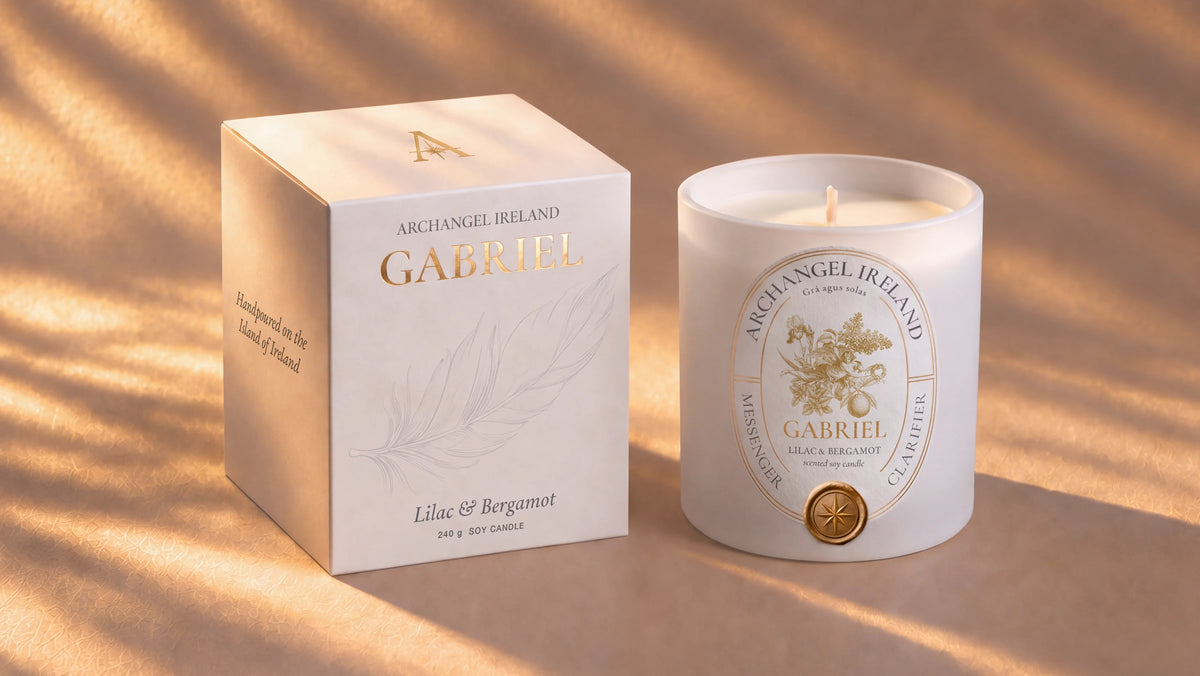
- → Gabriel Candle — for creativity, inspiration, and the courage to begin something new
- → Michael Candle — for the strength and protection to step into a new season with confidence
- → Raphael Candle — for healing and renewal as winter releases its hold
- → Uriel Candle — for the wisdom to know what to begin and what to leave behind
For more on creating an intentional candle practice around the Celtic calendar, read our guide to Samhain and the Celtic tradition of candlelight, or our guide to creating a candle ritual with archangel energy.

Written by Gareth W


Leave a comment
This site is protected by hCaptcha and the hCaptcha Privacy Policy and Terms of Service apply.